Tagged: phenomenology of spirit
The specificity of abstraction
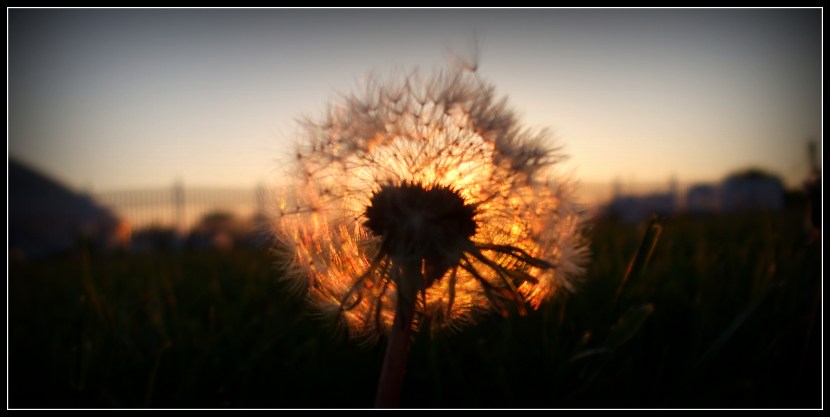
Hegel begins the Phenomenology of Spirit by refuting an unexamined, commonsense view about the nature of sense perception. This view holds that our richest, most accurate, and most genuine knowledge of the world emerges from our immediate sensory experience. I see a rolling meadow, a tree upon a hilltop, flowers dotting red and white along the countryside – and then I read that very same description in a book, or in a blog post. Surely, the commonsense thought goes, I am better acquainted with the world in the former case, when I stand in that meadow and direct my attention to it, this, in the here and now. The petals of the flowers flit in the wind, a rabbit peeks her head out from above the tall grass. On what grounds could I possibly dispute this, the rich specificity of my immediate experience?
The first step comes in recognizing that, if I’m really to be relying on my immediate experience, then I can have no recourse to such descriptions as in the paragraph above. After all, these words are hollow ghosts which describe, but are not, the experience itself – they are the experience as it is mediated through language (among other things). So we do away with them. I stand in the meadow, silent, head empty, and concentrate on the scene before me. This. Here. Now.
I leave the meadow and head for the woods, set camp in a copse along the way. The trees loom above me like spectres, but I am warm in front of the fire. I survey the scene before me. This. Here. Now.
The point, in any case, is that no matter where I am, when I am, nor what I’m experiencing, the only thing I’ll ever be able to come up with when asked to share my supposedly rich knowledge of the world is: This. Here. Now. I look at the sky, the This is the moon, and it shines softly amidst the stars, here, now. Hours later I do the same, the sun beats upon my brow, that blazing this, here, now. At this level of conceptual determination, I am unable to distinguish between the one and the other – I am unable to grasp the particularity of the moon nor the sun.
All I grasp, it turns out, is an abstraction which, it seems, can be applied to whichever sensory context I please. There is no sensory context in which it would not be appropriate to describe what one sees as a this, right here, right now. For this reason, the concept which we thought captured the world in all of its rich particularity ends up being one which captures the world at its emptiest. I yelp. The world, the flowers, the rabbits, the trees – so close I can touch them, smell them – in the end leave me Tantalus, grasping at but never reaching their truth.
. . .
What’s one to do? Hegel goes on to demonstrate how one progresses from this emptiest of abstractions to ones progressively richer, which encapsulate conceptually not only the properties but the dynamic relations between specific things in the world (including ourselves!). The speculative history of our progression from immediate sensory experience as the grounds for knowledge to more refined forms is the history of our self-realization as rational members of a rational world. In the end we are left with a conceptual scheme as rich and varied as the world it purports to describe, though at the expense of the naive and alluring simplicity of immediacy.
In a way this mirrors the developmental progression from childhood to adulthood – meals are not longer just given, and one must actually set themselves to work. And yet, a sort of childlike wonder is genuinely lost in this process of development. For in the empty abstraction of the this, here, now there really is a genuine mystery – one experiences the scene before them without a clue as to what its constituent parts are, nor how they relate, nor even that one is a separate thing from the world around them. All there is, is immediate sense experience, swaying and swirling greens and reds and blues and the cool of the breeze and the warmth of the sun – though not even these, for there are no concepts nor words at this stage to specify our experience.
Only this, here, now.
 lacun(a)head